

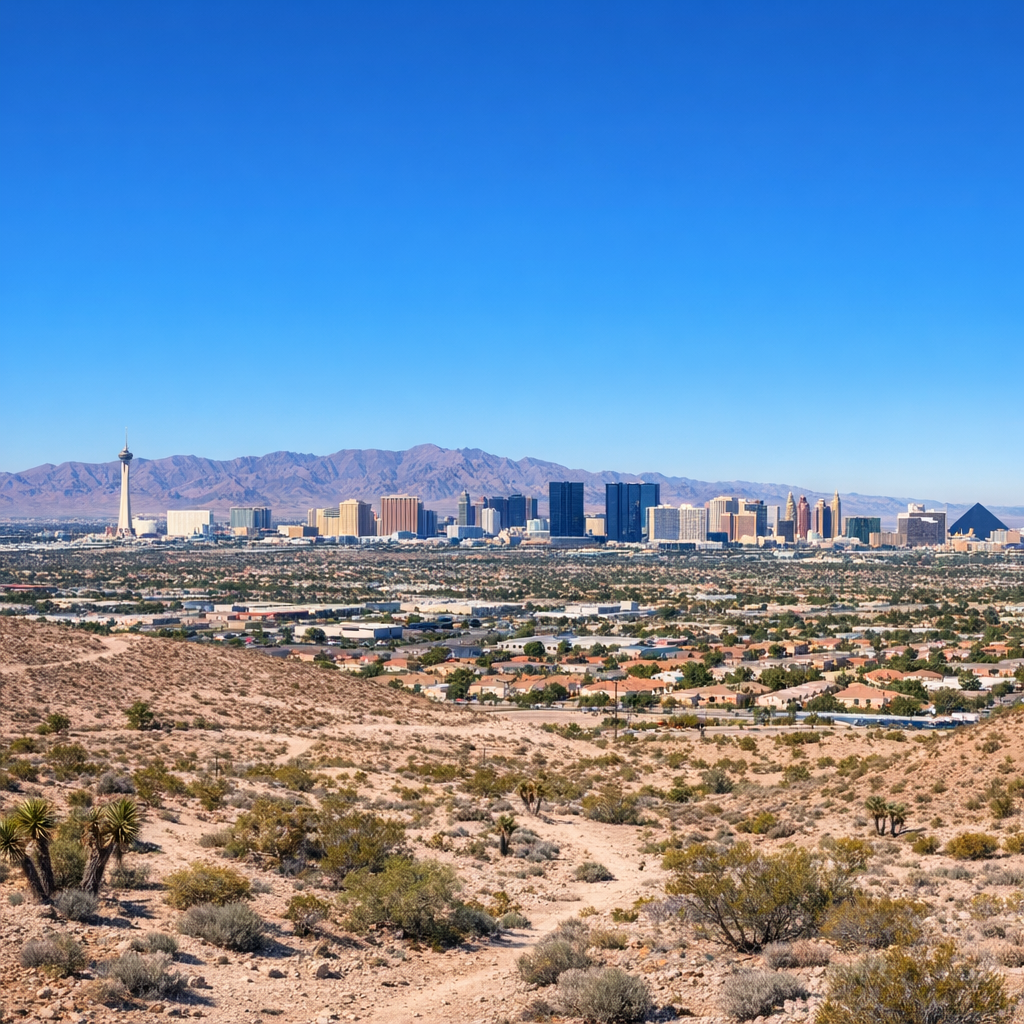
North Las Vegas, situated within the Mojave Desert, experiences a desert climate characterized by hot summers, mild winters, and minimal rainfall. Understanding these patterns is essential for residents and visitors alike.
Summer: Intense Heat and Clear Skies
Summers in North Las Vegas are notably hot and dry. The season spans from early June to mid-September, with average daily high temperatures exceeding 94°F. July stands out as the hottest month, boasting average highs around 104°F and lows near 78°F. During this period, the city enjoys mostly clear skies, making it ideal for outdoor activities, provided precautions are taken against the heat.
Winter: Mild Days and Cool Nights
Winter extends from late November to late February, offering a respite from the summer heat. Average daily high temperatures remain below 66°F, with December being the coolest month, featuring average highs of 57°F and lows of 38°F. Snowfall is a rare occurrence, happening only once every few years.
Spring and Autumn: Transitional Periods
Spring (March through May) and autumn (September through November) serve as transitional seasons. Spring sees temperatures rising from average highs of 64°F in March to 80.6°F in May. Autumn witnesses a gradual decrease, with highs dropping from 87.4°F in September to 61.2°F in November. These periods are marked by comfortable temperatures and minimal rainfall.
Precipitation: Sparse and Seasonal
North Las Vegas receives an average annual precipitation of approximately 4.27 inches. February is typically the wettest month, averaging 0.91 inches of rainfall. The city experiences about 26 days of rainfall annually, with no sharply defined wet season.
Environmental Considerations
The arid climate influences local environmental policies. The City of North Las Vegas emphasizes water conservation, given the limited rainfall and reliance on the Las Vegas Wash for water resources. Residents are encouraged to adopt water-saving practices to ensure sustainability.
Understanding the climate of North Las Vegas is crucial for planning daily activities, conserving resources, and appreciating the unique environment of this desert city.